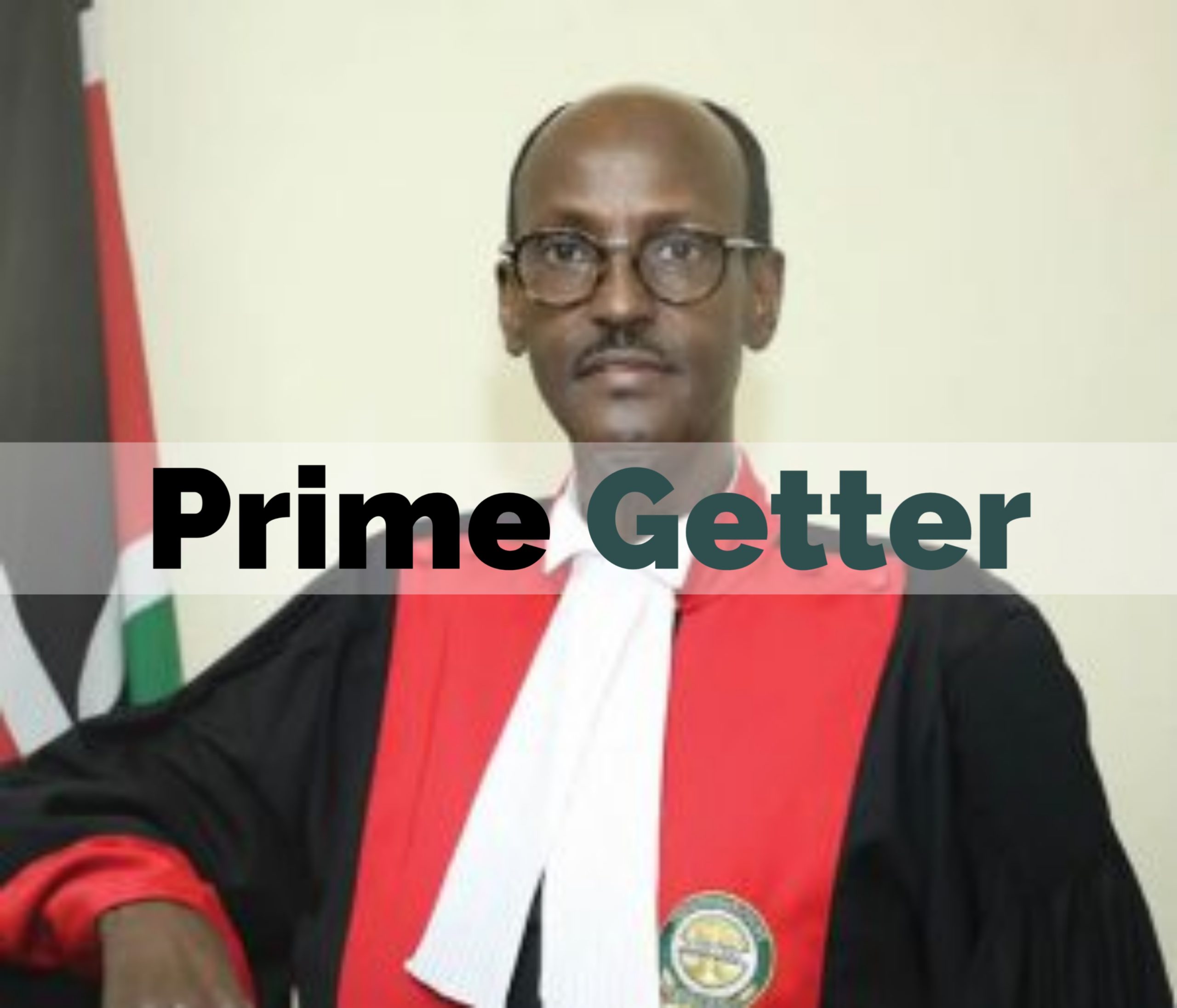

Justice Mohamed Ibrahim was born in 1956 in Kenya. He was of Somali descent and made history as the first Kenyan of Somali origin to be admitted to the Bar. His early life was shaped by strong cultural values and a commitment to education.
He studied Law at the University of Nairobi and later joined the Kenya School of Law for professional training. In November 1982, he joined the law firm Waruhiu & Muite Advocates. On 11 January 1983, he was admitted to the Roll of Advocates, marking the beginning of his legal career.
Justice Ibrahim quickly built a reputation as a courageous lawyer. During Kenya’s Second Liberation struggle, he stood out for his bold advocacy in defending human rights and promoting democracy. His work earned him respect across the legal fraternity.
In 2003, he was appointed as a Judge of the High Court of Kenya. His rulings often focused on constitutional matters and the protection of rights. His dedication to justice and fairness made him one of the most respected judges in the country.
On 16 June 2011, he was appointed to the inaugural Supreme Court of Kenya after open and competitive interviews. This was a major milestone in his career. He later became the Chairperson of the Judiciary Committee on Elections in August 2021, where he oversaw electoral justice. In May 2022, he was elected to represent the Supreme Court in the Judicial Service Commission (JSC).
Justice Ibrahim’s achievements included landmark rulings on constitutional interpretation, electoral disputes, and governance. He was known for his integrity, humility, and commitment to strengthening judicial independence. His work helped shape Kenya’s legal and constitutional framework.
He worked at the Supreme Court of Kenya until his death. His success was measured not only by his positions but also by the respect he earned from colleagues, lawyers, and citizens.
Justice Mohamed Ibrahim passed away on 17 December 2025 at Aga Khan Hospital in Nairobi after a period of illness. His death marked the end of a remarkable career in law and justice.
Justice Mohamed Ibrahim Early Life and Background
Justice Mohamed Ibrahim was born in 1956 in Kenya, growing up during a pivotal era of national transition. His roots were deeply embedded in the Somali community, which historically faced significant marginalization within the country’s professional spheres. Despite these societal hurdles, his childhood was defined by a commitment to discipline and the strong cultural values of his heritage. These early years in a close-knit community instilled in him a profound sense of justice and a desire to serve the public.His journey was truly pioneering. He eventually made history as the first Kenyan of Somali origin admitted to the Bar in the country. This achievement was not merely a personal milestone; it served as a powerful symbol of breaking glass ceilings for minority groups in the Kenya judiciary history. His background was also shaped by the political climate of the 1980s and 90s. Growing up, he witnessed the struggles for multi-party democracy, which later fueled his passion for the Second Liberation Kenya. This early environment of activism and community leadership provided the foundation for his reputation as a jurist who remained deeply connected to the struggles of ordinary citizens throughout his long and distinguished career.
Justice Mohamed Ibrahim Education
Justice Mohamed Ibrahim’s Education reflects a steady pursuit of legal excellence within Kenya’s premier institutions. He attended the University of Nairobi, where he earned his Bachelor of Laws (LLB) degree. This period was critical, as the university was a hotbed of intellectual and political discourse during his time there. Following his undergraduate studies, he moved to the Kenya School of Law to undergo the mandatory professional training required for legal practice in the country.
His dedication to the craft was formalized when he was admitted to the Roll of Advocates on 11 January 1983. This date marked the official beginning of his professional life and made him a trailblazer for his community in the legal field. His academic journey was not just about obtaining degrees; it was about mastering the tools of advocacy that he would later use to challenge the status quo. As a distinguished University of Nairobi alumni, he frequently returned to his roots to mentor law students, emphasizing that a solid educational foundation is the most potent weapon in the fight for human rights and constitutional reforms.
Justice Mohamed Ibrahim Career Beginnings
Justice Mohamed Ibrahim’s Career Beginnings were forged in the fires of private practice and political activism. In 1982, he joined the prestigious firm of Waruhiu & Muite Advocates, where he worked alongside some of the most prominent legal minds in the country. It was during this period that he built a reputation as a courageous lawyer. He became a central figure in the Second Liberation struggle for democracy, often representing political detainees and activists who dared to challenge the one-party state.
His work was dangerous and demanding. In July 1990, during the height of the “Saba Saba” protests, he was even detained by the government for his involvement in the struggle for multi-partyism. This experience only strengthened his resolve to advocate for human rights and constitutional reforms. He eventually established his own firm, Mohammed Ibrahim & Associates, where he continued to handle significant litigation until he joined the bench. His early career was characterized by a rare blend of professional skill and raw bravery, setting him apart as a lawyer who was willing to risk his personal freedom for the sake of national progress and the rule of law.
Also Read: Honoring Junior King Biography: Kariega Roots, TikTok Fame, Hip Hop Career & Tragic N1 Accident
Justice Mohamed Ibrahim Rise to Prominence
Justice Mohamed Ibrahim’s Rise to Prominence saw him transition from a vocal activist lawyer to a respected arbiter of the law. His judicial career officially began in 2003 when he was appointed a Judge of the High Court of Kenya. During his time at the High Court, he served in various stations, including Nairobi, Eldoret, and Mombasa. He earned a reputation for fairness and for writing well-reasoned, thorough judgments that respected the dignity of all litigants.
The pinnacle of his ascent occurred in 2011. Following the enactment of the new Constitution in 2010, he participated in the first-ever open and televised interviews for the Supreme Court. He was successful and became one of the inaugural Supreme Court of Kenya judges. His influence continued to grow within the institution; he served as the Chairperson of the Judiciary Committee on Elections (JCE) from 2021 until his passing. Additionally, he was elected to represent the Supreme Court in the Judicial Service Commission (JSC) starting in 2022. This trajectory from a detained lawyer to a member of the highest court and a representative on the commission that hires judges is one of the most remarkable stories in Kenya judiciary history.
Justice Mohamed Ibrahim Major Achievements and Work
Justice Mohamed Ibrahim’s Major Achievements and Work are synonymous with the development of modern Kenyan jurisprudence. As a member of the Supreme Court, he delivered landmark rulings on human rights, electoral justice, and constitutional interpretation. He was part of the bench that heard the historic presidential election petitions of 2013, 2017, and 2022, playing a vital role in ensuring that electoral disputes were resolved through a transparent legal process rather than violence.
Beyond the courtroom, his work as the Chairperson of the Judiciary Committee on Elections was instrumental in preparing the judiciary for the complexities of contested polls. He was a staunch defender of judicial independence, often speaking out against attempts to interfere with the courts. His colleagues and the legal fraternity remembered him for his integrity, humility, and dedication to justice. He famously handled high-stakes cases involving land rights, gender equity, and the devolution of power, always seeking to balance the letters of the law with the spirit of the 2010 Constitution. His commitment to public service and his meticulous approach to case management left an indelible mark on how the Supreme Court functions as the final guardian of the Constitution.
Justice Mohamed Ibrahim Family and Personal Life
Justice Mohamed Ibrahim’s Family and Personal Life were characterized by a quiet dignity that mirrored his professional demeanor. He was married and had children, but he was known for being intensely private about his domestic affairs. He deliberately kept his family out of the limelight, ensuring that they had a normal life away from the high-pressure environment of the Supreme Court of Kenya. Friends and close associates described him as a devoted family man who found peace and rejuvenation in his home life.
Those who knew him personally often spoke of his humility and approachable nature. Despite his high-ranking position, he never lost his connection to his Somali roots and was a respected elder within his community. He was known for balancing his demanding career with a commitment to his faith and community service. His personal life was guided by the same principles of honesty and respect that he applied on the bench. His passing left a void not only in the judiciary but also in the lives of his loved ones, who remember him as a pillar of strength and a source of wise counsel.
Justice Mohamed Ibrahim Legacy and Success
Justice Mohamed Ibrahim’s Legacy and Success are measured by the profound transformation of the Kenyan legal landscape during his tenure. He is celebrated as a towering figure in constitutional law, having helped interpret the 2010 Constitution during its most formative years. His success was not just about the titles he held, but the bravery he showed during the Second Liberation and the integrity he maintained while on the bench. He proved that it was possible to be a “rebel” for justice and still rise to the highest court in the land.
His impact is visible in the increased transparency of the Kenya judiciary history. By being part of the inaugural Supreme Court, he helped set the standards for judicial conduct and public accountability. His death in December 2025 was widely seen as the end of an era in Kenya’s legal fraternity. He leaves behind a judiciary that is more independent and a legal system that is more accessible to minorities. His life serves as an enduring inspiration for young lawyers from marginalized backgrounds, proving that merit, courage, and a dedication to the truth can overcome any obstacle.
Justice Mohamed Ibrahim Frequently Asked Questions (People Also Ask)
- Who was Justice Mohamed Ibrahim?Justice Mohamed Ibrahim was a pioneering Kenyan jurist and one of the inaugural judges of the Supreme Court of Kenya. He was also a prominent human rights lawyer during Kenya’s struggle for democracy.
- What was Justice Mohamed Ibrahim’s age and date of birth?He was born in 1956 and was 69 years old at the time of his death on 17 December 2025.
- Which tribe did Justice Mohamed Ibrahim belong to?He was of Somali descent, becoming the first Kenyan of Somali origin to be admitted as an advocate in Kenya.
- Where did Justice Mohamed Ibrahim study law?He earned his law degree from the University of Nairobi and completed his professional training at the Kenya School of Law.
- What role did Justice Mohamed Ibrahim play in Kenya’s Supreme Court?He served as a Justice of the Supreme Court for over 14 years, was a member of the Judicial Service Commission (JSC), and chaired the Judiciary Committee on Elections.
- What were Justice Mohamed Ibrahim’s major achievements?His achievements include being a hero of the Second Liberation, delivering landmark constitutional rulings, and helping establish the Supreme Court of Kenya as a credible institution.
- When did Justice Mohamed Ibrahim die?He passed away on 17 December 2025 at the Aga Khan Hospital in Nairobi.
- What is Justice Mohamed Ibrahim’s legacy in Kenya’s judiciary?His legacy is defined by his integrity, dedication to the rule of law, and his role in opening the doors of the judiciary to minority communities in Kenya.
Justice Mohamed Khadhar Ibrahim Age and Verified Judicial Timeline
Justice Mohamed Ibrahim Age is 69 years old. He was born in 1956 in Kenya.
Justice Mohamed Khadhar Ibrahim Wife and Private Family Life
Justice Mohamed Ibrahim Wife is not publicly named. Reports confirm that the late Supreme Court Judge was married and left behind his wife and four children, but her identity has not been disclosed in public records.
Also Read: Capturing DJ Warras Biography: Durban Roots, Radio Fame, TV Career & Tragic Johannesburg Shooting
Justice Mohamed Khadhar Ibrahim Cause of Death and National Tributes
Justice Mohamed Ibrahim cause of death was a long illness. He passed away on 17 December 2025 at the Aga Khan Hospital in Nairobi after battling health complications for several weeks.
Justice Mohamed Khadhar Ibrahim Quick-Reference Supreme Court Profile

| Profile | Information |
| Justice Mohamed Ibrahim career | Justice of the Supreme Court of Kenya (2011–2025); Representative to the Judicial Service Commission (JSC); Chairperson of the Judiciary Committee on Elections; Former High Court Judge. |
| Justice Mohamed Ibrahim real name | Mohamed Khadhar Ibrahim |
| Justice Mohamed Ibrahim age | 69 years old (at the time of his death) |
| Justice Mohamed Ibrahim date of birth | 1 January 1956 |
| Justice Mohamed Ibrahim net worth | Not publicly known (Estimated in the millions of Kenyan shillings from a 40-year career in private practice and the judiciary.) |
| Justice Mohamed Ibrahim wife / spouse | Married (Survivals include his wife; her name is typically kept private in official judicial tributes.) |
| Justice Mohamed Ibrahim children | Four children |
| Justice Mohamed Ibrahim parents | Not known (Of Somali descent; raised in a family that valued community service.) |
| Justice Mohamed Ibrahim religion | Islam (A prominent figure in the Muslim legal community.) |
| Justice Mohamed Ibrahim state of origin | Kenya (Wajir County roots; belongs to the Kenyan Somali community.) |
| Justice Mohamed Ibrahim alma mater | University of Nairobi (LLB); Kenya School of Law. |
| Justice Mohamed Ibrahim education | Bachelor of Laws (LLB); Diploma from the Kenya School of Law. |
| Justice Mohamed Ibrahim nationality | Kenyan |
Leave a Reply