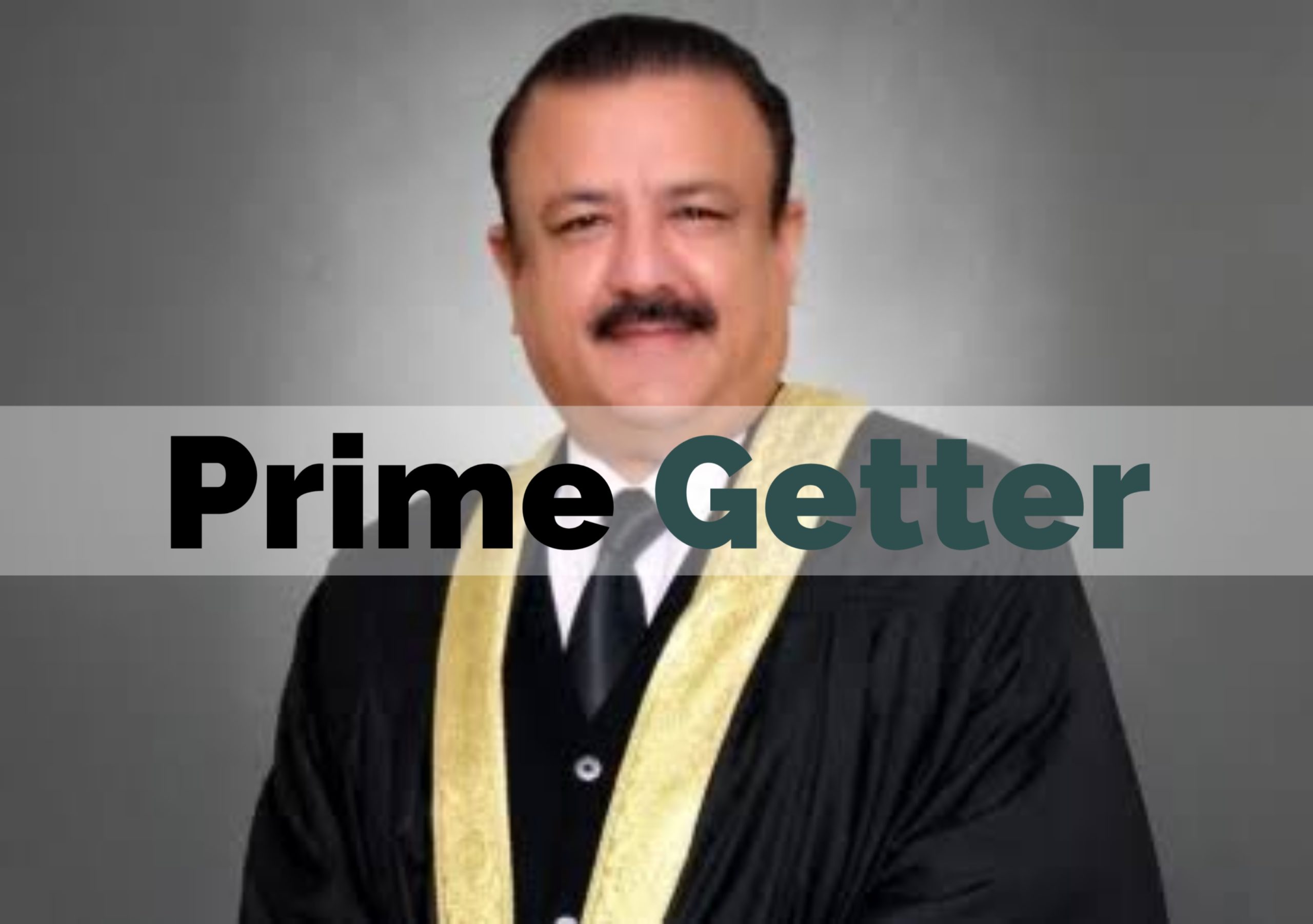

Justice Tariq Mehmood Jahangiri was born on 10 July 1965 in Mansehra District, Khyber Pakhtunkhwa. He belongs to the Jahangiri clan of the Swati tribe. His early education took place in Peshawar, and in 1979, he moved to Islamabad to continue his studies. He attended Islamabad Model College, Government Gordon College Rawalpindi, and Federal Government Post Graduate College Islamabad.
He later pursued a Law degree at the University of Karachi, which laid the foundation for his career in the legal field. After completing his studies, he apprenticed under Justice Sardar Muhammad Aslam (late) in Rawalpindi. He was enrolled as an Advocate of the Lower Courts in 1992, admitted to the High Court in 1994, and became an Advocate of the Supreme Court of Pakistan in 2008.
In 1992, he established his own law firm, Jahangiri Law Associates, in Islamabad. Many young lawyers trained under him, and his firm became known for mentoring future advocates. His reputation as a dedicated lawyer grew steadily, and he became recognized for his professionalism and commitment to justice.
Justice Jahangiri’s judicial career reached its peak when he was appointed as a Justice of the Islamabad High Court on 28 December 2020. He served in this position until 18 December 2025, handling important constitutional and civil cases. His work at the High Court reflected his deep knowledge of law and his ability to manage complex legal matterson 10 July 1965.
However, his career faced challenges. In September 2025, he was suspended after questions arose regarding the validity of his law degree. The Islamabad High Court officially de-notified him in December 2025, and the matter was referred to the Supreme Judicial Council (SJC) for investigation. Despite this controversy, his earlier contributions to the legal profession remain part of his legacy.
Justice Jahangiri is married, though he has kept his family life private. His success is tied to his long journey from a student in Peshawar to a respected lawyer and judge in Islamabad. His story reflects determination, resilience, and the challenges that come with public service.
Justice Jahangiri Early Life and Background
Justice Tariq Mehmood Jahangiri was born on 10 July 1965 in the Mansehra District of Khyber Pakhtunkhwa, Pakistan. He originates from the Jahangiri clan of the Swati tribe, a community known for its historical roots in the Hazara region and a tradition of producing notable public figures. His early childhood was spent in the culturally rich environment of Peshawar, where he received his initial education. These formative years in the northern regions of Pakistan instilled in him a strong sense of communal identity and resilience.
In 1979, his life took a significant turn when he relocated to Islamabad. This move to the capital city opened up new academic and professional horizons. He adjusted quickly to the urban environment, which offered a stark contrast to his rural origins. His background as a “son of the soil” from Mansehra remained a core part of his identity even as he integrated into the intellectual and social circles of Islamabad. This transition from the traditional landscapes of Khyber Pakhtunkhwa to the administrative heart of the country provided him with a unique perspective. It allowed him to understand both the grassroots issues of his home district and the complex legal dynamics of the capital, a dual perspective that would later characterize his career in the Pakistan judiciary.
Justice Jahangiri Education
Justice Jahangiri’s Education spanned several prominent institutions across Pakistan, reflecting a broad academic journey. After moving to the capital, he attended Islamabad Model College (F-8/4). He later moved to Rawalpindi for higher studies, enrolling at the historic Government Gordon College. He continued his academic pursuit at the Federal Government Post Graduate College (H-8) in Islamabad. These institutions provided him with a strong liberal arts and social science foundation.
His professional focus, however, was on the law. He earned his Law degree from the University of Karachi. This period of his life was later subjected to intense scrutiny. While he maintained that he successfully completed his LLB in the late 1980s, the University of Karachi eventually submitted records to the court alleging that the degree was obtained through “unfair means.” Specifically, it was claimed that he had been debarred from exams in 1988 for cheating and later sat for the exams under a changed name in 1989. Despite these later allegations, his education at the time allowed him to enter the legal profession and rise through the ranks to the superior judiciary. He also served as a member of the visiting faculty at Quaid-e-Azam University, where he taught criminal law for several years, sharing his academic knowledge with the next generation of lawyers.
Justice Jahangiri Career Beginnings
Justice Jahangiri’s Career Beginnings started in the early 1990s with a focus on practical legal training. He apprenticed under Justice Sardar Muhammad Aslam (late) in Rawalpindi, a mentorship that shaped his early understanding of the courtroom. His professional milestones followed in quick succession: he was enrolled as an Advocate of Lower Courts in 1992, an Advocate of the High Court in 1994, and finally as an Advocate of the Supreme Court of Pakistan in 2008.
In 1992, he took the entrepreneurial step of founding Jahangiri Law Associates in Islamabad. His firm became a prominent name in the capital, specializing in criminal, civil, and constitutional law. Through this practice, he built a solid reputation as a reliable and skilled litigator. He also became deeply involved in bar politics, a common path for influential lawyers in Pakistan. He served as the General Secretary of the Islamabad District Bar Association (2002–03) and later as its President (2005–06). His rise within the legal fraternity was further solidified when he was elected President of the Islamabad High Court Bar Association in 2016. These roles allowed him to advocate for the rights of lawyers and established him as a key figure in the legal community before he eventually joined the bench.
Justice Jahangiri Rise to Prominence
Justice Jahangiri’s Rise to Prominence was marked by his transition from bar leadership to high-ranking government legal positions. Before joining the bench, he served as the Deputy Attorney General for Pakistan from 2011 to 2013. He later reached a professional pinnacle in the executive branch when he was appointed Advocate General for Islamabad Capital Territory in 2018. In this capacity, he represented the state in significant matters before the Supreme Court of Pakistan and the Islamabad High Court.
His extensive experience and reputation for legal expertise led to his appointment as a Justice of the Islamabad High Court in December 2020. He was initially appointed as an additional judge and was later confirmed as a permanent judge. As a jurist, he oversaw significant constitutional and civil cases, often making headlines for his bold decisions. He gained national attention in 2023 when he issued a “blanket protection order” for former Prime Minister Imran Khan, a move that was praised by some as a defense of civil liberties and criticized by others as overstepping judicial boundaries. His rise was characterized by his willingness to take on sensitive cases and his firm standing on judicial independence, particularly when he became one of the six IHC judges to write a letter alleging interference by intelligence agencies in judicial affairs.
Justice Jahangiri Major Achievements and Work
Justice Jahangiri’s Major Achievements and Work are highlighted by his dual contribution as a mentor and a jurist. Through his firm, Jahangiri Law Associates, he trained many young lawyers, acting as a significant mentor in the Islamabad legal circuit. Many of his former associates have gone on to hold successful positions in the judiciary and private practice. His contributions to legal education through his five-year stint as a faculty member at Quaid-e-Azam University further demonstrate his commitment to the profession.
In his judicial capacity, he played a role in shaping Islamabad High Court jurisprudence, particularly in matters of criminal and constitutional law. He was known for his “pro-citizen” approach in many service and labor law disputes. His most notable “achievement” in the eyes of the legal community was his participation in the joint letter to the Supreme Judicial Council (SJC) in March 2024. By alleging interference by intelligence agencies, he and his colleagues sparked a national debate on the independence of the judiciary. While his career was later marred by controversy, his work in the bar and his initial years on the bench were recognized for their vigor and his ability to navigate the complex intersection of law and politics in the capital city.
Justice Jahangiri Family and Personal Life
Justice Jahangiri’s Family and Personal Life remain largely out of the public eye, adhering to the traditional privacy maintained by members of the superior judiciary in Pakistan. He is married and has a family, but specific details regarding his wife or children are kept strictly confidential. This privacy is intended to protect his family from the intense scrutiny and potential pressures associated with high-profile judicial work.
He is known for balancing professional commitments with personal responsibilities, often described by his colleagues as a disciplined and focused individual. Despite his urban professional life, he maintained strong ties to his Swati tribe and his native Mansehra. He was often seen as a bridge between the traditional tribal values of his heritage and the modern legal framework of the capital. This personal grounding in his community was a key part of his public persona, even as he navigated the most sophisticated legal challenges in Islamabad. His personal integrity was a major point of his defense during his legal battles, as he famously offered to take an oath on the Holy Quran to prove the genuineness of his academic credentials.
Justice Jahangiri Controversies and Challenges
Justice Jahangiri’s Controversies and Challenges culminated in a historic and unprecedented exit from the judiciary. In July 2024, a campaign began on social media alleging that his LLB degree from the University of Karachi was “fake” or “invalid.” This led to a complaint being filed with the Supreme Judicial Council (SJC). In September 2025, an IHC division bench barred him from performing judicial duties, an order that was briefly set aside by the Supreme Court before the IHC resumed proceedings.
The situation worsened when the University of Karachi syndicate officially cancelled his degree, alleging it was secured through “unfair means” in 1989. On 18 December 2025, a division bench of the Islamabad High Court issued a final ruling declaring his elevation to the superior court “without lawful authority.” The court ruled that since his degree was invalid at the time of his appointment, he was never eligible to be a judge. Consequently, he ceased to hold the office of the IHC judge forthwith. This was followed by a formal de-notification by the President. Jahangiri vigorously challenged these moves, labeling them as “biased” and a “near-fatal blow to the independence of the judiciary,” particularly given his earlier role in exposing agency interference. This fake degree controversy remains one of the most polarizing episodes in recent Pakistani judicial history.
Justice Jahangiri Frequently Asked Questions (People Also Ask)
- Who is Justice Jahangiri?Justice Tariq Mehmood Jahangiri was a judge of the Islamabad High Court from 2020 until December 2025. He was previously a prominent lawyer and Advocate General of Islamabad.
- What is Justice Jahangiri’s age and date of birth?Justice Jahangiri is 60 years old. He was born on 10 July 1965.
- Which tribe does Justice Jahangiri belong to?He belongs to the Jahangiri clan of the Swati tribe, hailing from Mansehra, Khyber Pakhtunkhwa.
- Where did Justice Jahangiri study law?He earned his LLB degree from the University of Karachi, although the validity of this degree was later contested and cancelled by the university.
- What role did Justice Jahangiri play in the Islamabad High Court?He was a senior judge who handled major constitutional and criminal cases and was one of the six judges who complained about intelligence agency interference.
- What are Justice Jahangiri’s major achievements?His achievements include serving as President of the IHC Bar, Advocate General of Islamabad, and his mentorship of young lawyers through his law firm.
- Was Justice Jahangiri suspended or removed?Yes, on 18 December 2025, he was removed from office after the Islamabad High Court declared his appointment illegal due to an invalid law degree.
- What is Justice Jahangiri’s legacy in Pakistan’s judiciary?His legacy is complex; he is seen by supporters as a “brave judge” who stood for judicial independence and by critics as a figure whose career was undermined by a fake degree controversy.
Tariq Mehmood Jahangiri Age and Verified Judicial Timeline
Justice Jahangiri Age is 60 years old. He was born on 10 July 1965 in Mansehra District, Khyber Pakhtunkhwa, Pakistan.
Also Read: Honoring Junior King Biography: Kariega Roots, TikTok Fame, Hip Hop Career & Tragic N1 Accident
Tariq Mehmood Jahangiri Wife and Private Family Life
Justice Jahangiri Wife is not publicly named. Available sources confirm that Justice Tariq Mehmood Jahangiri, former judge of the Islamabad High Court, is married, but his wife’s identity and personal details have not been disclosed in public records.
Tariq Mehmood Jahangiri Quick-Reference Legal Profile

| Profile | Information |
| Justice Jahangiri career | Former Justice of the Islamabad High Court (2020–2025); Former Advocate General for Islamabad; Former Deputy Attorney General for Pakistan; Founder of Jahangiri Law Associates. |
| Justice Jahangiri real name | Tariq Mehmood Jahangiri |
| Justice Jahangiri age | 60 |
| Justice Jahangiri date of birth | 10 July 1965 |
| Justice Jahangiri net worth | Not known |
| Justice Jahangiri wife / spouse | Married (Details kept private.) |
| Justice Jahangiri children | Has children (Details kept private.) |
| Justice Jahangiri parents | Not known (Hails from the Jahangiri clan of the Swati tribe.) |
| Justice Jahangiri religion | Islam |
| Justice Jahangiri state of origin | Pakistan (Mansehra District, Khyber Pakhtunkhwa.) |
| Justice Jahangiri alma mater | University of Karachi; Government Gordon College; Islamabad Model College. |
| Justice Jahangiri education | Bachelor of Laws (LLB) from the University of Karachi. |
| Justice Jahangiri nationality | Pakistani |
Leave a Reply