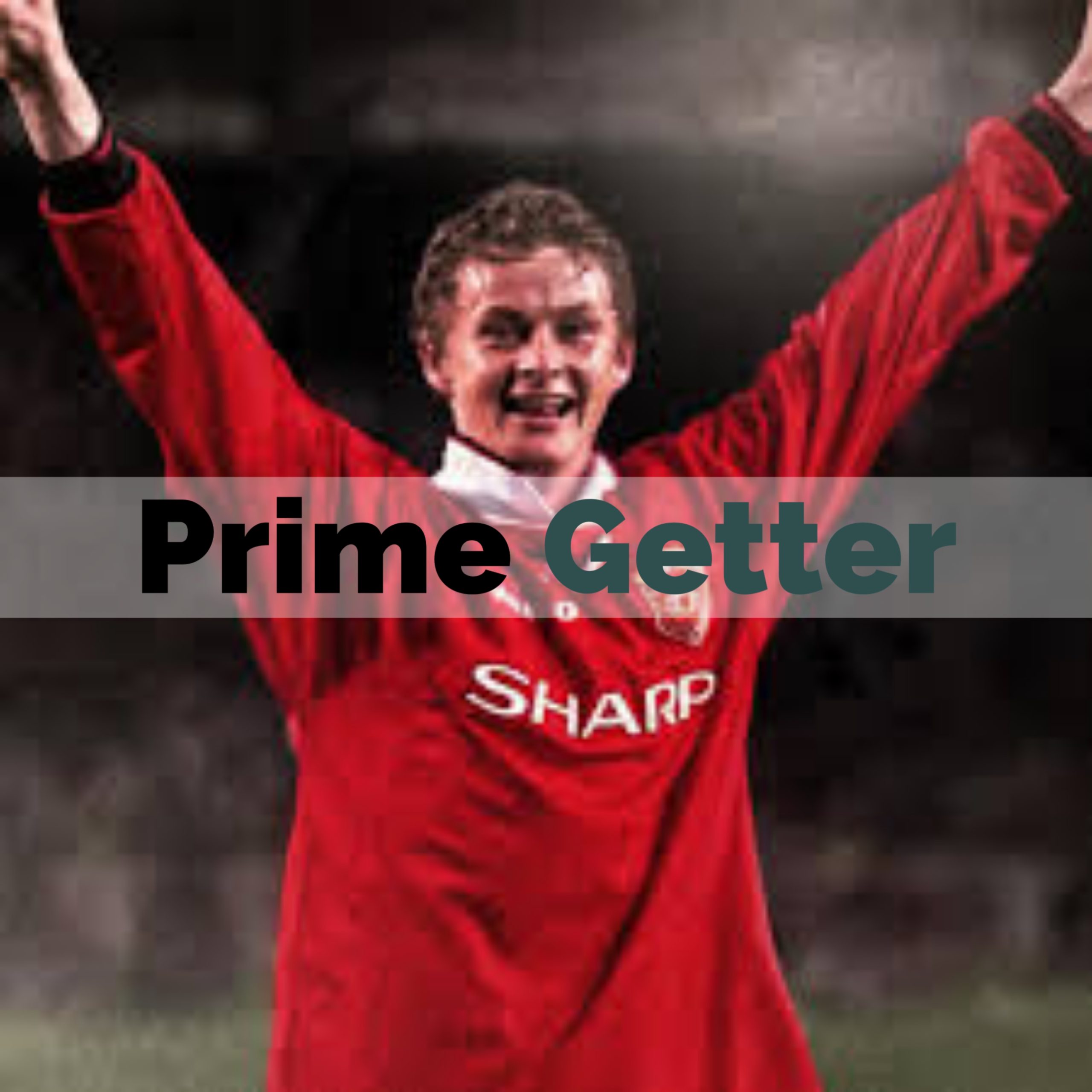

Ole Gunnar Solskjaer was born on 26 February 1973 in Kristiansund, Norway. He is 52 years old as of 2026. He grew up with a love for football and started playing at Clausenengen FK, where he developed his skills as a forward. His education focused on sports and training, preparing him for a professional career in football.
He moved to Molde FK in 1995 and quickly impressed with his goal scoring ability. In 1996, Manchester United signed him for £1.5 million. He became famous as the “Baby-Faced Assassin” for his calm finishing and sharp instincts. He scored the winning goal in the 1999 UEFA Champions League Final against Bayern Munich, securing the treble for Manchester United. During his time at the club, he scored 91 goals in 235 league appearances and won multiple Premier League titles, FA Cups, and the Champions League.
Ole Gunnar also represented Norway at international level, earning 67 caps and scoring 23 goals between 1995 and 2007. His playing career ended in 2007 due to injuries, but he remained at Manchester United as a coach for the reserve team. He later returned to Molde FK as manager, guiding them to league titles and building his reputation as a coach.
In 2014, he managed Cardiff City in the Premier League, though his time there was short. He went back to Molde before being appointed Manchester United manager in December 2018. He led the team to several top-four finishes, an unbeaten away run in the league, and a Europa League final. Although he did not win major trophies as manager, he restored attacking football and gave opportunities to young players.
In 2025, Ole Gunnar took charge of Beşiktaş J.K., continuing his career in management. His achievements as a player and manager have made him one of the most respected figures in football. He is married to Silje Solskjaer and has three children. Despite his global success, he remains closely connected to his hometown in Norway, where he supports local football development.
Ole Gunnar Solskjær Early Life and Background
Ole Gunnar Solskjær was born on February 26, 1973, in the coastal town of Kristiansund, Norway. Growing up in a sports-oriented environment, he was the son of Øyvind Solskjær, a former Norwegian wrestling champion. Despite his father’s background in combat sports, Ole developed an early and intense passion for football. He spent much of his childhood practicing his finishing skills on the local pitches of his hometown, a dedication that would later earn him global recognition for his clinical precision in front of the goal.
His upbringing in Norway was characterized by a modest and disciplined lifestyle. He often balanced his footballing ambitions with his education and mandatory military service in the Norwegian Army. This period of service helped instill the mental toughness and discipline that defined his professional demeanor. Many fans often ask, “Where was Ole Gunnar Solskjaer born?” and his roots remain firmly planted in Kristiansund. Even after achieving worldwide fame, he maintained strong ties to his local community. His early background provided the foundational values of hard work and humility that became his trademarks throughout his illustrious career in the Premier League and beyond.
Ole Gunnar Solskjær Education and Early Football Development
Ole Gunnar Solskjær began his formal footballing journey with his local club, Clausenengen FK (CFK), in Kristiansund. He joined the youth ranks at a young age, where his natural talent for goal-scoring quickly became evident to his coaches. While he pursued his basic schooling in Norway, his primary “education” took place on the training grounds of CFK. He made his debut for the senior team at the age of 17 in 1990, immediately making an impact with his incredible scoring rate.
During his five-year tenure at Clausenengen, he developed into a prolific forward, scoring 115 goals in just 109 league appearances. This extraordinary record helped the club secure promotion to the Norwegian Second Division in 1993. When people ask, “Which club did Ole Gunnar start his career with?” Clausenengen is the definitive answer. His early development was marked by a sharp increase in physical strength and tactical intelligence. By the time he moved to Molde FK in 1995, he had already perfected the “predatory” instincts that would later terrorize defenders across Europe. His time at CFK served as the perfect springboard, proving that elite talent could emerge from even the smaller clubs in Norway.
Ole Gunnar Solskjær Professional Playing Career
Ole Gunnar Solskjær officially moved to the top flight of Norwegian football in 1995 when he signed for Molde FK. His impact was instantaneous; he scored 31 goals in 38 appearances for the club, catching the eye of major European scouts. In July 1996, Sir Alex Ferguson signed him for Manchester United for a fee of £1.5 million. This transfer would prove to be one of the greatest bargains in football history. During his eleven seasons at Old Trafford, he became a club legend, scoring 126 total goals in 366 appearances across all competitions.
In league play specifically, he netted 91 goals in 235 appearances, often delivering crucial strikes in the final minutes of matches. Many supporters frequently ask, “How many goals did Ole Gunnar score for Manchester United?” and while his total tally is 126, his efficiency off the bench was what truly set him apart. He possessed an uncanny ability to read the game from the sidelines, allowing him to exploit tired defenses as soon as he entered the pitch. His professional career at United was defined by loyalty and a relentless pursuit of excellence, even as he battled chronic knee injuries in his later years. He eventually retired from playing in 2007, leaving behind a legacy of clinical finishing and immense tactical awareness.
Ole Gunnar Solskjær Career Highlights at Manchester United
Ole Gunnar Solskjær is most famously remembered for his heroic winning goal in the 1999 UEFA Champions League Final against Bayern Munich. Coming on as a substitute in injury time, he poked the ball into the roof of the net to complete a miraculous 2-1 comeback, securing Manchester United’s historic treble. This moment cemented his place in football folklore and is the primary reason he is known as a legendary figure at Old Trafford. Beyond that iconic night in Barcelona, he was also celebrated for scoring four goals in just twelve minutes as a substitute against Nottingham Forest in 1999.
His youthful appearance earned him the nickname “The Baby-Faced Assassin,” while his impact as an impact player led to the title of the ultimate “Super Sub.” When fans ask, “What is Ole Gunnar Solskjaer best known for?” it is this combination of a youthful face and a deadly finishing touch. During his time at the club, he won six Premier League titles, two FA Cups, and the Intercontinental Cup. His tactical discipline was such that Sir Alex Ferguson often described him as a “player-manager” on the pitch. His ability to change the course of a game within minutes remains a standard by which all modern impact substitutes are measured.
Ole Gunnar Solskjær International Career
Ole Gunnar Solskjær enjoyed a distinguished international career representing the Norway national team from 1995 to 2007. He made his debut in a friendly against Jamaica in November 1995, scoring a goal in a 1-1 draw. Over twelve years, he earned 67 caps and scored 23 goals for his country. He was a vital part of Norway’s most successful era, forming a formidable strike partnership with Tore André Flo. This duo was instrumental in helping Norway reach the knockout stages of the 1998 FIFA World Cup in France.
In addition to the World Cup, he represented Norway at UEFA Euro 2000. Many supporters ask, “Did Ole Gunnar play for Norway?” and his record shows he was one of their most reliable performers on the international stage. His last international goals came in 2006 during a Euro 2008 qualifying match against Hungary, where he scored twice in a 4-1 victory. He made his final appearance for the national team in February 2007 against Croatia. His international legacy is defined by his consistency and his ability to replicate his club-level poaching instincts for the “Landslaget,” making him one of Norway’s all-time top scorers.
Ole Gunnar Solskjær Managerial Career
Ole Gunnar Solskjær transitioned into coaching immediately after retiring, starting with the Manchester United reserves. He gained his first senior managerial role at Molde FK in 2011, where he famously led the club to their first-ever Norwegian league title. Following a brief and challenging spell at Cardiff City in 2014, he returned to Molde, where he continued to rebuild his reputation. In December 2018, he returned to Old Trafford as caretaker manager, replacing José Mourinho. His immediate impact led to his permanent appointment in March 2019, and he managed Manchester United until November 2021, guiding them to two top-three finishes and the 2021 Europa League Final.
After a period away from the dugout, he made a high-profile return to management in early 2025. On January 18, 2025, he was officially appointed as the manager of the Turkish giants, Beşiktaş J.K. He signed a contract until the end of the 2025-26 season. His tenure in Istanbul started strongly, as he achieved a record points-per-game ratio for the club in his first several matches. When fans ask, “Which teams has Ole Gunnar Solskjaer managed?” the list now includes Molde, Cardiff City, Manchester United, and Beşiktaş. His managerial style is often characterized by a preference for the 4-2-3-1 formation and a focus on attacking, fast-paced football that respects the history of the clubs he leads.
Ole Gunnar Solskjær Achievements and Recognition
Ole Gunnar Solskjær has accumulated an impressive array of trophies and honors throughout his career as both a player and a manager. As a player for Manchester United, he won six Premier League titles, two FA Cups, and the 1999 UEFA Champions League. He was also part of the squad that won the Intercontinental Cup and multiple Community Shields. His individual recognition includes being awarded the Knight of the Order of St. Olav, First Class, by King Harald V of Norway in 2008 for his contributions to sport and his role as a positive ambassador for his country.
As a manager, his primary achievements include winning two consecutive Eliteserien titles with Molde FK in 2011 and 2012, as well as the Norwegian Football Cup in 2013. During his tenure at Manchester United, he was credited with restoring the club’s identity and helping them achieve back-to-back top-four finishes for the first time since Sir Alex Ferguson’s retirement. PAA queries regarding “What are Ole Gunnar Solskjaer’s achievements?” often point to this dual success across different roles. His legacy is defined by a winning mentality that spanned over three decades, making him one of the most decorated and respected figures in Norwegian football history.
Ole Gunnar Solskjær Family and Personal Life
Ole Gunnar Solskjær is married to Silje Solskjær (née Lyngvær), and the couple has been together since his early days at Clausenengen. They have three children: Noah, Karna, and Elijah. His family is deeply involved in football; his eldest son, Noah, is a professional footballer who has played for Kristiansund and Aalesund. His daughter, Karna, also played for the Manchester United women’s youth team and made her senior debut in 2022, making them the first father-daughter duo to play for the club.
When researchers ask, “Who is Ole Gunnar Solskjaer’s wife?” Silje is often noted for her supportive role throughout his career, often seen with their children at his matches. Despite his global fame, he is known for being a private individual who values a quiet life in Norway. He frequently returns to Kristiansund, where he has been involved in voluntary coaching for local youth teams. His personal life reflects the same humility and dedication he showed on the pitch. He has often stated that his family’s support was the key to his resilience during his long periods of injury and the pressures of managing at the highest level of European football.
Ole Gunnar Age (Chronological Lifecycle Milestone and Professional Maturity Stage)
Ole Gunnar age stands at 52, having been born on 26 February 1973 in Kristiansund, Norway. His date of birth places him among the generation of footballers who rose to prominence in the 1990s.
Ole Gunnar Wife (Inquiry into Domestic Partnership and Private Marital Bonds)
Ole Gunnar Wife is Silje Solskjaer, who has shared much of his journey from Norway to Manchester. Their marriage has been steady through his playing days and later during his managerial career. Ole Gunnar Wife is often mentioned in connection with their family life, as they have three children together.
Ole Gunnar Stats (Quantitative Performance Metrics and Career Scoring Achievement Records)
Ole Gunnar Stats show 91 goals in 235 Premier League appearances for Manchester United between 1996 and 2007. His record also includes 23 goals in 67 matches for Norway’s national team. Ole Gunnar Stats highlight his decisive impact as a substitute, most famously with the winning strike in the 1999 Champions League Final.
Ole Gunnar Current Team (Professional Institutional Affiliation and Present Managerial Coaching Status)
Ole Gunnar Current Team has recently been linked with Manchester United once again after the dismissal of Ruben Amorim. Reports suggest Ole Gunnar Current Team could soon be confirmed in an interim capacity, as the club considers him among the leading candidates to stabilize the squad.
Ole Gunnar Profile Table (Structured Data Matrix of Essential Biographical Reference Points)
| Profile | Information |
| Ole Gunnar career | Football Manager and Former Professional Player |
| Ole Gunnar real name | Ole Gunnar Solskjær |
| Ole Gunnar age | 52 years old |
| Ole Gunnar date of birth | February 26, 1973 |
| Ole Gunnar net worth | Estimated $10 million – $25 million |
| Ole Gunnar wife / spouse | Silje Solskjær |
| Ole Gunnar children | 3 (Noah, Karna, Elijah) |
| Ole Gunnar parents | Øyvind Solskjær (Father) |
| Ole Gunnar religion | Not known |
| Ole Gunnar state of origin | Kristiansund, Norway |
| Ole Gunnar alma mater | Not known |
| Ole Gunnar education | Not known |
| Ole Gunnar nationality | Norwegian |
Leave a Reply